Turkey Visit Visa: Requirements, Documents, and Application Process
Turkey is a popular travel destination for people who want to explore beautiful landscapes, historical landmarks, modern cities, and rich cultural traditions. From the busy streets of Istanbul to the stunning beaches of Antalya and the natural beauty of Cappadocia, Turkey offers something for almost every type of traveller. If you’re planning a holiday, visiting family, or travelling for another short-term purpose, understanding the visa process is an important first step.
For Pakistani passport holders, preparing a Turkey visit visa application requires careful attention to eligibility, supporting documents, and the purpose of travel. A well-organized application can help the relevant authorities understand your travel plans, financial situation, and intention to return to Pakistan after your visit.
This guide explains the Turkey visit visa process, including eligibility, required documents, application steps, common mistakes, travel preparation, and useful tips. Whether you’re travelling alone, with family, or for a short holiday, you’ll find practical information to help you prepare your application.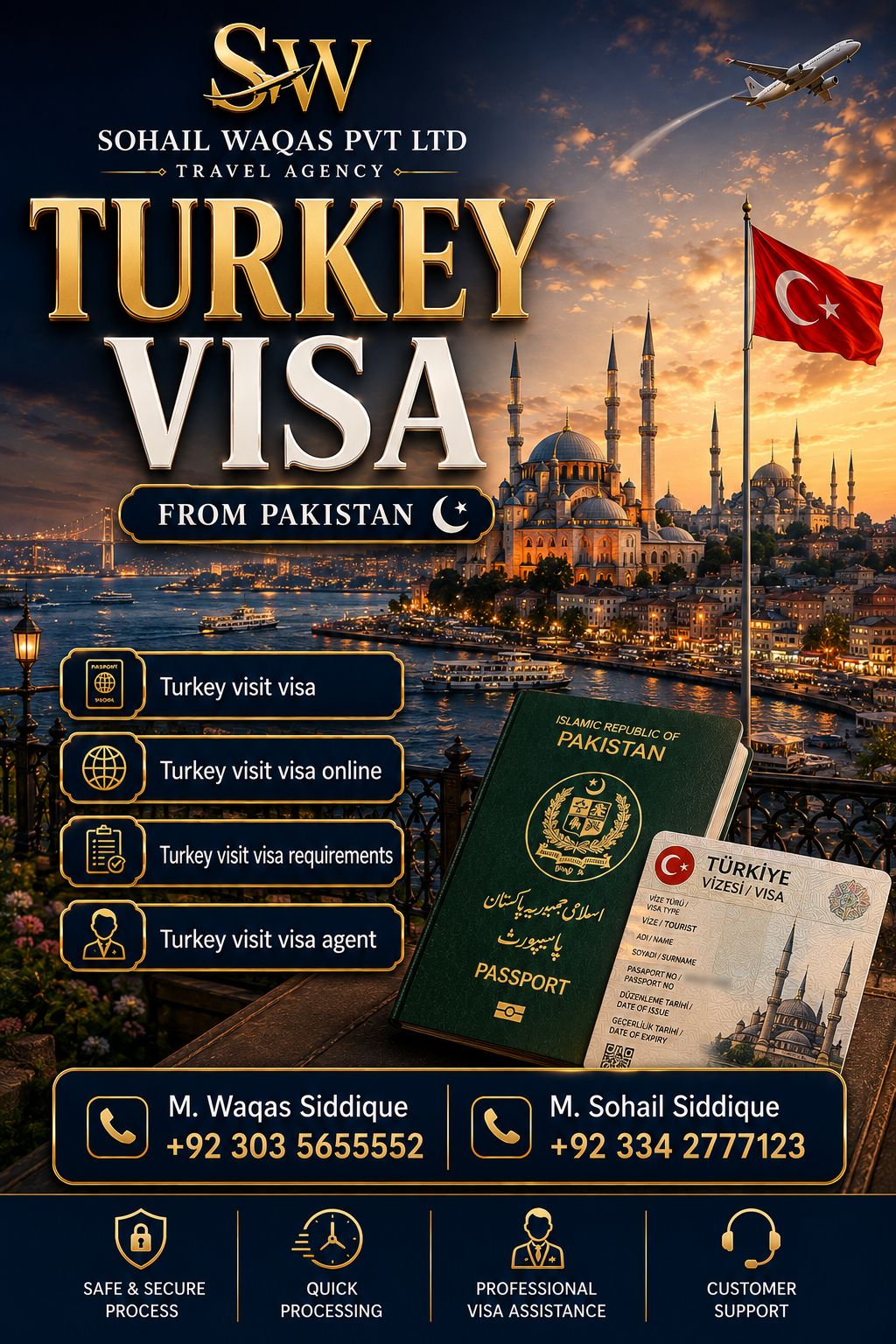
What Is a Turkey Visit Visa?
A Turkey visit visa is a travel authorization that allows eligible foreign nationals to enter Turkey for a permitted short-term purpose, subject to the conditions of their visa. Depending on your nationality and circumstances, you may need a sticker visa, qualify for an electronic visa, or be eligible to enter under a visa exemption.
A visit visa is generally used for purposes such as:
-
Tourism and holidays
-
Visiting friends or family members
-
Short-term personal visits
-
Exploring historical and cultural attractions
-
Certain other temporary activities permitted under the relevant visa category

A visit visa does not automatically grant permission to work, settle permanently, or undertake activities that require a different type of authorization. Your permitted activities depend on the visa issued to you.
For Pakistani applicants, it is especially important to check the applicable visa category before beginning the application. Eligibility can depend on passport type, supporting documents, and whether the applicant holds a valid visa or residence permit from another country.
Why Visit Turkey?
Turkey connects Europe and Asia and has a unique mix of historical, cultural, and natural attractions. Its cities offer a combination of traditional architecture, modern shopping areas, local markets, and internationally known landmarks.
Here are some reasons travellers choose Turkey:
1. Historical and Cultural Attractions
Turkey has a long history shaped by several civilizations and empires. Visitors can explore ancient ruins, historic mosques, museums, palaces, and traditional neighbourhoods.
Istanbul is particularly popular for its historical sites, including Hagia Sophia, the Blue Mosque, and Topkapi Palace. These attractions provide insight into the country’s cultural and architectural heritage.
2. Beautiful Natural Landscapes
Turkey offers a wide range of natural scenery, from mountains and valleys to coastlines and unique rock formations.
Cappadocia is known for its unusual landscapes and hot-air balloon experiences. Antalya and other coastal destinations attract travellers interested in beaches, scenic views, and outdoor activities.
3. Food and Local Traditions
Turkish cuisine is an important part of the country’s cultural identity. Travellers can experience traditional dishes, local bakeries, tea culture, and regional food traditions.
Visitors can also explore local bazaars, handicraft shops, and traditional neighbourhoods to learn more about everyday Turkish life.
4. Family Holidays
Turkey is a destination where families can enjoy a combination of sightseeing, shopping, nature, and leisure activities. Families travelling from Pakistan may find it helpful to prepare a shared itinerary that includes suitable attractions for adults and children.
5. Shopping and Modern Cities
Cities such as Istanbul, Ankara, and Izmir have shopping centres, local markets, restaurants, and entertainment options. Visitors can explore both modern urban areas and traditional markets during their stay.
Understanding your travel purpose before applying will help you choose the correct visa category and prepare relevant supporting documents.
Turkey Visit Visa Requirements for Pakistani Citizens
Pakistani citizens generally need an appropriate visa before travelling to Turkey. The exact application route depends on the applicant’s eligibility and the current requirements set by Turkish authorities.
Applicants should make sure that their documents support the information provided in their application. The purpose of travel, planned duration, accommodation arrangements, and financial circumstances should be clearly explained.
Common requirements may include:
-
A valid Pakistani passport
-
A completed visa application form
-
Recent passport-sized photographs meeting the specified requirements
-
A travel itinerary
-
Proof of accommodation or an invitation, where applicable
-
Evidence of sufficient financial resources
-
Employment, business, or other professional documents, where relevant
-
Supporting documents showing the purpose of travel
-
Evidence of ties to Pakistan and reasons to return
-
Travel medical insurance, if required
-
Additional documents requested by the relevant visa authorities
Not every applicant will need exactly the same documents. Requirements may vary depending on the visa category, individual circumstances, and the application channel.
Before submitting your application, check the latest document checklist provided by the Turkish authorities or the authorized visa application centre responsible for your location.
Types of Turkey Visit Visas
The appropriate visa option depends on your nationality, eligibility, and travel purpose. Pakistani applicants should identify which route applies to them before preparing their application.
1. Tourist Visa
A tourist visa is intended for people visiting Turkey for leisure, sightseeing, holidays, or similar short-term tourism activities.
Applicants may need to provide:
-
A clear travel itinerary
-
Details of planned tourist activities
-
Accommodation information
-
Evidence of financial resources
-
Documents supporting their intention to return to Pakistan
For example, if you’re planning a family holiday in Istanbul and Antalya, your itinerary should explain where you intend to stay and the places you plan to visit.
2. Family Visit Visa
A family visit is intended for people travelling to Turkey to visit relatives who are legally residing there.
Depending on the applicable requirements, applicants may be asked for:
-
An invitation letter from the host
-
The host’s identification or residence documents
-
Proof of the family relationship
-
Details of the planned visit
-
Financial supporting documents
The invitation should clearly explain the relationship between the applicant and the host, the purpose of the visit, and the intended duration of the stay.
An invitation letter does not guarantee visa approval. The applicant may still need to demonstrate their own eligibility and meet all other requirements.
3. Electronic Visa (e-Visa)
Turkey offers electronic visas to eligible nationalities and applicants who meet the applicable conditions. However, eligibility is not the same for every passport holder.
Some Pakistani citizens may qualify for an electronic visa if they meet the additional conditions established by Turkish authorities. These can include holding a valid visa or residence permit from a specified country, as well as satisfying other requirements.
Applicants should use the official Turkish e-Visa system to confirm their eligibility before applying. If you don’t meet the conditions for an e-Visa, you may need to follow the sticker visa process.
4. Short-Term Visit for Other Permitted Purposes
Some short-term visits may fall under categories other than standard tourism or family visits. The correct category depends on the actual reason for travel.
Applicants should not select a tourist category if their intended activities require a different authorization. Providing an accurate travel purpose helps ensure the application is assessed under the appropriate rules.
Documents Required for a Turkey Visit Visa
Preparing the right documents is one of the most important parts of the application process. Your documents should provide a consistent picture of who you are, why you’re travelling, how you’ll support yourself, and what connects you to Pakistan.
The following documents are commonly relevant to a tourist or family visit application.
1. Valid Pakistani Passport
Your passport is the main identity and travel document for your application. Make sure it is valid for the required period and has sufficient space for visa processing, where applicable.
Check the following before applying:
-
Your passport details are accurate and readable.
-
Your passport is not damaged.
-
Your personal information matches your application form.
-
Any previous visas and relevant travel history are available for review.
Turkish authorities generally require a passport to remain valid for at least 60 days beyond the permitted duration of stay, although additional requirements may apply.
2. Completed Visa Application Form
Applicants using the sticker visa route may need to complete a preliminary application form through the designated Turkish visa application system.
Make sure the information you provide is accurate and consistent with your supporting documents. Review your name, passport number, intended travel dates, occupation, and accommodation details before submitting the form.
Incorrect or incomplete information can lead to delays or requests for clarification.
3. Recent Passport-Sized Photographs
You may be asked to submit recent photographs that meet the official specifications.
The photograph should generally have:
-
A plain, light-coloured background
-
A clear and recent image
-
A neutral facial expression
-
Good lighting and visibility
-
The required dimensions and format
Always follow the exact photograph specifications in the current checklist.
4. Bank Statement and Financial Proof
Financial documents help demonstrate that you can support yourself during your planned stay in Turkey.
Depending on your circumstances, supporting evidence may include:
-
Recent personal bank statements
-
Bank account maintenance certificates, if requested
-
Salary slips
-
Business income records
-
Other verifiable evidence of financial resources
Your financial documents should be genuine and consistent with your employment or business background. Avoid making unexplained deposits shortly before applying, as unusual transactions may raise questions about the source of funds.
5. Employment or Business Documents
Your professional situation can help explain your financial stability and ties to Pakistan.
If you’re employed, you may be asked to provide:
-
An employment verification letter
-
An approved leave letter
-
Recent salary slips
-
An employee identification document, where relevant
If you’re self-employed or own a business, you may provide:
-
Business registration documents
-
Tax records, where applicable
-
Evidence of business activity
-
Supporting financial documents
If you’re a student, documents such as an enrolment certificate and approved leave information may be relevant.
6. Travel Itinerary
A travel itinerary explains the purpose and structure of your visit. It should include your intended arrival and departure dates, destinations, and planned activities.
For example, a traveller planning to spend time in Istanbul and Cappadocia can prepare a simple itinerary showing the intended number of days in each destination.
Your itinerary should be realistic and match the information in your application. Avoid including activities that do not match the visa category you’re applying for.
7. Accommodation Details
Applicants may be required to provide evidence of where they intend to stay during their visit.
This may include:
-
Hotel booking information
-
Accommodation details provided by a host
-
An invitation letter, where applicable
-
Other supporting accommodation evidence accepted by the relevant authority
Make sure your accommodation details are consistent with your travel dates and itinerary.
8. Travel Medical Insurance
Travel medical insurance may be required, depending on the applicable visa checklist and circumstances.
When insurance is required, check that the policy meets the relevant conditions, including the geographical area and coverage period. Keep a copy of the policy with your other travel documents.
9. Family and Additional Supporting Documents
Applicants travelling with family members may need to provide additional documents, depending on their circumstances.
These may include:
-
Marriage certificates
-
Birth certificates for children
-
Proof of relationship with a host
-
Parental consent documents for minors, where applicable
-
Other documents requested during processing
Documents that are not in an accepted language may need an appropriate translation or other authentication, depending on the instructions provided by the relevant authorities.
Turkey Visit Visa Application Process: Step by Step
Understanding the process before you apply can help you avoid unnecessary delays. The exact procedure depends on whether you qualify for an e-Visa or need to apply for a sticker visa.
1
Check Your Visa Eligibility
Start by identifying your passport type and travel purpose. Pakistani ordinary passport holders generally require a visa to visit Turkey. Some may qualify for a conditional e-Visa if they meet the relevant requirements, while others must apply for a sticker visa.
2
Select the Correct Application Route
Check the official Turkish e-Visa eligibility system if you believe you qualify. If you’re not eligible, follow the current sticker visa application procedure for Pakistan, using the authorized application channel.
3
Complete the Application Form
Enter your personal details, passport information, travel dates, and purpose of visit carefully. Check that the information matches your passport and supporting documents.
4
Prepare Your Supporting Documents
Organize your passport, photographs, financial evidence, employment or business documents, itinerary, accommodation information, and any additional documents required for your specific case.
5
Submit Your Application
Follow the instructions of the relevant Turkish authorities and authorized visa application centre. Submit the completed form and the required supporting documents through the designated process.
6
Attend Any Required Appointment
Depending on the application route, you may need to provide biometric information, attend an appointment, or respond to requests for further information. Follow the instructions provided with your application.
7
Wait for the Visa Decision
The relevant authorities assess your application and supporting documents. Keep your application reference and monitor any updates or requests for additional information.
8
Review Your Visa Before Travelling
If your visa is approved, check your name, passport number, validity dates, number of entries, and permitted duration of stay. Keep the visa available during your journey.
Turkey e-Visa for Pakistani Citizens
The Turkish e-Visa system provides an electronic application route for eligible travellers. Pakistani ordinary passport holders are among the nationalities that may qualify, subject to specific additional conditions.
For eligible Pakistani applicants, a valid visa or residence permit from certain countries, such as the Schengen area, the United States, the United Kingdom, or Ireland, may be a qualifying supporting condition. Applicants must also meet the other requirements set by Turkish authorities.
The official e-Visa system is used to determine eligibility based on the applicant’s nationality, travel document, and other relevant details.
Before applying, keep the following points in mind:
-
Each traveller, including children and infants, needs their own e-Visa if travelling under this system.
-
An e-Visa is intended for permitted tourism or trade activities, not for employment or study.
-
The visa’s validity period and permitted duration of stay are different.
-
The information on the e-Visa must match your travel document exactly.
-
An approved e-Visa does not remove the need to meet entry requirements at the Turkish border.
Applicants who do not meet the conditions for an e-Visa should consider the applicable sticker visa procedure instead.
Turkey Visit Visa Processing Time
The processing time for a Turkey visit visa can vary depending on the application category, the completeness of your documents, and the workload of the relevant authorities.
Some applications may be processed without additional requests, while others may require further documents, clarification, or additional assessment.
To avoid travel-related problems:
-
Apply well before your intended departure date.
-
Submit a complete and accurate application.
-
Respond promptly if additional information is requested.
-
Avoid making non-refundable travel arrangements before receiving the necessary visa approval.
-
Allow extra time for public holidays or periods of high application demand.
There is no guaranteed processing time for every applicant. The estimated timeframe provided by the relevant application centre or Turkish authorities should be used as a guide rather than a promise.
Turkey Visit Visa Validity and Duration of Stay
Visa validity and permitted duration of stay are two different things. Understanding this distinction can help you avoid overstaying or travelling outside the conditions of your visa.
Visa validity refers to the period during which you may use your visa to enter Turkey.
Duration of stay refers to the number of days you’re permitted to remain in Turkey under the visa conditions.
For example, a visa may be valid for a particular period but allow you to stay for fewer days within that period. Your actual permitted stay depends on the visa issued to you.
Before travelling, check:
-
The visa’s starting and expiry dates
-
Whether it permits single or multiple entries
-
The maximum permitted duration of stay
-
Any specific conditions printed on the visa
Never assume that a visa’s validity period means you can remain in Turkey for the entire period. You must follow the exact conditions of your issued visa.
What Are the Common Reasons for Turkey Visit Visa Rejection?
A visa application may be refused if the relevant authorities are not satisfied that the applicant meets the applicable requirements. A refusal does not necessarily mean that the applicant can never obtain a visa, but it is important to understand the reasons behind the decision.
Some common concerns may include:
1. Incomplete Documentation
Missing documents can make it difficult for visa officers to assess your application. If required financial records, employment evidence, or travel details are unavailable, the authorities may request further information or refuse the application.
How to avoid it: Review the current checklist carefully and organize all required documents before submission.
2. Unclear Travel Purpose
Your application should clearly explain why you’re visiting Turkey and what you intend to do during your stay.
If your itinerary, invitation letter, and application form provide conflicting information, it may create uncertainty about your travel purpose.
How to avoid it: Prepare a realistic itinerary and make sure all your documents support the same purpose of travel.
3. Insufficient Financial Evidence
Applicants may need to demonstrate that they can reasonably support themselves during their stay. Financial documents that don’t match the applicant’s stated income or professional background may require further explanation.
How to avoid it: Provide genuine, consistent financial evidence and be prepared to explain unusual transactions or sources of funds.
4. Weak Evidence of Return Plans
Authorities may assess whether an applicant’s circumstances are consistent with a temporary visit.
Employment, education, business responsibilities, family circumstances, or other commitments may be relevant to this assessment.
How to avoid it: Provide genuine documents that accurately demonstrate your personal and professional circumstances in Pakistan.
5. Incorrect Information
Errors in passport details, dates, personal information, or other parts of the application may lead to complications.
How to avoid it: Carefully check the completed form and compare it against your original documents before submission.
6. Inconsistent Supporting Documents
If your bank statement, employment letter, travel itinerary, and application form contain conflicting information, the authorities may request clarification.
How to avoid it: Make sure your documents are accurate, consistent, and supported by genuine evidence.
Tips to Prepare a Strong Turkey Visit Visa Application
A carefully prepared application makes it easier for the relevant authorities to understand your circumstances. While no document or strategy can guarantee approval, these practical steps can help you avoid common problems.
-
Apply under the correct visa category: Your chosen category should reflect the actual reason for your visit.
-
Maintain document consistency: Your personal information and travel details should match across all documents.
-
Show genuine financial circumstances: Submit authentic financial records that reflect your actual income and financial situation.
-
Prepare a practical itinerary: Your travel plans should be reasonable for the intended duration of your visit.
-
Explain your professional background: Include appropriate employment, business, or educational documents, depending on your circumstances.
-
Disclose relevant travel history accurately: Provide the information requested about previous international travel and visas.
-
Check your passport carefully: Ensure it meets the applicable validity requirements.
-
Avoid false documents: Misleading information or forged supporting records can have serious consequences for your application.
-
Keep copies of your documents: Save copies of the submitted application and supporting records for your own reference.
-
Follow official instructions: Application procedures can change, so use the latest requirements for your location.
A useful approach is to review your application as if someone unfamiliar with your circumstances were reading it. The purpose of travel, financial arrangements, and return plans should be easy to understand from the information provided.
Turkey Visit Visa for Families
Families travelling together should prepare their applications carefully. Each family member may need a separate application, even when the family shares the same travel itinerary.
Parents travelling with children should check whether additional documents are required, such as birth certificates, parental consent, or custody-related documents.
For a family trip, it may be useful to organize:
-
Passports and photographs for each applicant
-
Individual application forms, where required
-
Evidence of family relationships
-
Shared accommodation and travel plans
-
Financial evidence from the relevant sponsor or family members
-
Additional documents for minors, if applicable
Family members should make sure their individual applications are consistent with the shared travel purpose. However, each applicant’s eligibility and supporting circumstances may be assessed separately.
Turkey Visit Visa for Business Owners and Employees
Your employment or business background may be relevant when applying for a tourist or family visit visa because it can help explain your financial circumstances and commitments in Pakistan.
For salaried employees, an employment letter can confirm your position, duration of employment, and approved leave, where applicable.
Business owners may provide relevant registration, tax, or operational documents that demonstrate their business activities. Self-employed applicants should ensure that their income records and financial information are consistent with their declared occupation.
Applicants who are not employed should provide genuine evidence of their financial support and personal circumstances, as relevant.
There is no single professional profile that guarantees visa approval. Each application is assessed according to the applicable requirements and the applicant’s individual circumstances.
Best Time to Plan Your Trip to Turkey
Turkey has different travel experiences throughout the year, so your preferred travel season may depend on the activities you have planned.
|
Season |
General Conditions |
Popular Activities |
|---|---|---|
|
Spring |
Generally mild weather |
Sightseeing, historical tours, outdoor exploration |
|
Summer |
Warm to hot, depending on the region |
Coastal holidays, beaches, outdoor activities |
|
Autumn |
Often mild and comfortable |
City tours, cultural visits, photography |
|
Winter |
Cold in many areas, with possible snowfall |
Winter scenery, museums, seasonal activities |
Spring and autumn are popular periods for exploring cities and historical attractions because the weather is often suitable for outdoor sightseeing. Summer attracts travellers interested in coastal destinations, while winter offers a different experience in cities and mountainous areas.
When planning your trip, consider the weather, your preferred activities, local holidays, and the time needed to complete your visa application.
What to Do After Your Turkey Visit Visa Is Approved
Receiving a visa is an important step, but you should still prepare carefully before departure.
Here are some useful steps to follow:
-
Check the visa details against your passport.
-
Confirm that your intended arrival falls within the visa’s validity period.
-
Review the permitted duration of stay and number of entries.
-
Keep your accommodation and return travel information accessible.
-
Carry supporting documents that may be relevant at border control.
-
Arrange any required travel medical insurance.
-
Keep a digital and printed copy of your visa, where applicable.
Turkish border authorities retain the right to assess travellers on arrival. Having an approved visa does not automatically guarantee entry into the country.
Common Mistakes to Avoid When Applying
Even applicants with genuine travel intentions can experience difficulties if they make avoidable mistakes during the application process.
Some common mistakes include:
-
Applying under an incorrect visa category
-
Submitting incomplete application forms
-
Providing outdated or inconsistent financial records
-
Giving unclear accommodation information
-
Using an unrealistic travel itinerary
-
Ignoring the current document checklist
-
Submitting photographs that do not meet the specifications
-
Providing inaccurate information about employment or travel history
-
Assuming that an e-Visa is available to every Pakistani passport holder
-
Overlooking the conditions and permitted duration of stay
Taking the time to review your application before submission can help you identify missing documents and inconsistencies.
Frequently Asked Questions (FAQs)
1. Do Pakistani citizens need a visa to visit Turkey?
Yes. Pakistani citizens holding ordinary passports generally require a visa to visit Turkey. Some may qualify for a conditional e-Visa if they meet the applicable requirements. Pakistani official passport holders have separate visa exemption provisions.
2. Can Pakistani citizens apply for a Turkey e-Visa?
Yes, eligible Pakistani ordinary passport holders may apply for a Turkish e-Visa if they satisfy the additional conditions set by Turkish authorities. Eligibility should be confirmed through the official e-Visa system before starting an application.
3. What documents are required for a Turkey visit visa from Pakistan?
Commonly required documents include a valid passport, completed application form, recent photographs, financial evidence, travel itinerary, accommodation details, and supporting employment, business, or family documents where applicable. The exact checklist depends on the visa category and the applicant’s circumstances.
4. How long does it take to process a Turkey visit visa?
Processing times vary according to the application route, individual circumstances, document completeness, and the workload of the relevant authorities. Applicants should apply well ahead of their planned departure and follow the current processing guidance provided by the responsible application centre.
5. Can I visit Turkey for tourism with a family invitation letter?
An invitation letter may support a family visit application by explaining the relationship with the host and the purpose of travel. However, an invitation does not guarantee approval, and the applicant must still meet the applicable visa requirements.
6. Can I work in Turkey on a visit visa?
A standard tourist or visit visa does not authorize employment in Turkey. People intending to work must obtain the appropriate work-related authorization and visa before undertaking employment activities.
Contact Details
Planning a trip to Turkey? For assistance with understanding the Turkey visit visa application process, document preparation, and travel planning, you can contact:
Sohail Waqas Travels
M. Waqas Siddique
+92 303 5655552
M. Sohail Siddique
+92 334 2777123
Related Reading: Malaysia eVisa: Requirements, Application Process And Guide 2026
