
Indonesia Investor Visa Requirements: Complete Guide for Investors
Indonesia has become an attractive destination for entrepreneurs, business owners, and foreign investors looking for new opportunities in Southeast Asia. With a large consumer market, growing industries, and access to regional business networks, the country offers plenty of reasons to explore investment-based residency options.
But before you start preparing documents or planning your move, you need to understand the rules that apply to foreign investors. The application isn’t simply about proving that you have money to invest. Your investment structure, company involvement, immigration status, supporting documents, and compliance with Indonesian regulations can all matter.
Understanding the Indonesia investor visa requirements before starting the process can save you from incomplete paperwork, unnecessary delays, and avoidable mistakes. This guide explains the key requirements, documents, application process, eligibility considerations, common errors, and practical tips you should know.
If you’re applying from Pakistan, the process may also require careful coordination between your personal documents, business records, passport information, and Indonesian immigration requirements.
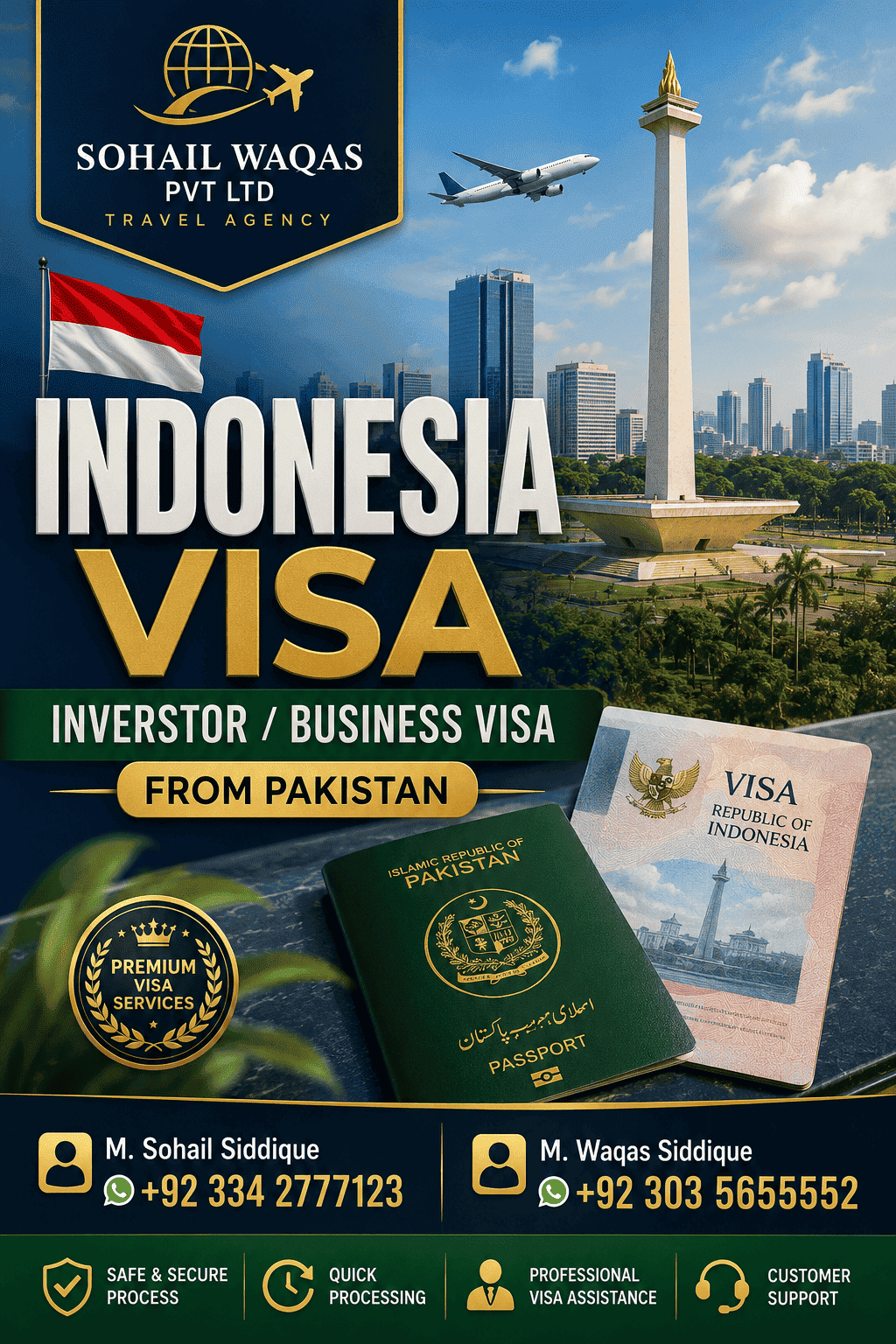
What Is an Indonesia Investor Visa?
An Indonesia investor visa is an immigration pathway designed for eligible foreign investors who want to invest in Indonesia and, depending on the specific visa or residence category, stay in the country for business and investment purposes.
The exact immigration category and conditions can depend on the nature of your investment and your intended activities in Indonesia. Indonesia has updated its immigration framework in recent years, so applicants should always confirm the rules that apply at the time of application.
For an investor, the basic idea is straightforward: instead of entering Indonesia only as a tourist, you establish a qualifying investment relationship with the country and apply under an appropriate investor-related immigration route.
This can be useful if you want to:
-
Explore long-term business opportunities in Indonesia
-
Establish or participate in an Indonesian company
-
Manage an investment from within Indonesia
-
Build business relationships with Indonesian partners
-
Spend extended periods in the country
-
Develop a regional business presence
The key point is that an investor visa isn’t the same thing as an ordinary tourist visa or a general business visit. Each immigration category has its own purpose and conditions.
Who Can Apply for an Indonesia Investor Visa?
Foreign nationals who meet the relevant investment and immigration conditions may be eligible to apply for an investor-related visa or residence permit.
Potential applicants can include:
-
Company founders
-
Business owners
-
Entrepreneurs
-
Foreign investors
-
Shareholders in qualifying Indonesian companies
-
International businesspeople expanding into Indonesia
-
Senior business professionals connected with an eligible investment structure
However, simply owning a business outside Indonesia doesn’t automatically make you eligible.
Your proposed investment must fit the applicable Indonesian rules, and your documentation needs to support the information you provide in the application.
For example, imagine a Pakistani entrepreneur who wants to establish a business presence in Jakarta. Having a successful company in Pakistan may strengthen the applicant’s overall business profile, but it doesn’t by itself satisfy Indonesian investment requirements. The Indonesian investment structure still needs to meet the applicable rules.
That’s one of the areas where applicants sometimes misunderstand the process.
Key Indonesia Investor Visa Requirements
The exact requirements can vary according to the immigration category and the applicant’s circumstances. Still, there are several major areas you should prepare for.
1. Valid Passport
A valid passport is one of the basic requirements for any Indonesian immigration application.
Your passport should have sufficient validity for the intended application and stay period. Make sure the passport details match your other documents.
Before applying, check:
-
Passport validity
-
Blank pages where applicable
-
Name spelling
-
Date of birth
-
Passport number
-
Nationality
-
Previous travel or immigration records if requested
A small mismatch between documents can create unnecessary questions during processing.
2. Proof of Investment
Investment evidence is one of the most important parts of an investor application.
Depending on the applicable investor category, authorities may require evidence showing that the applicant has made, or is committed to making, a qualifying investment in Indonesia.
This may involve documents connected to:
-
Company ownership
-
Shareholding
-
Investment registration
-
Capital participation
-
Corporate records
-
Indonesian business entities
-
Investment-related declarations
Don’t assume that a bank statement alone proves an eligible investment. The investment normally needs to fit the legal structure required for the immigration category you’re applying under.
3. Indonesian Company or Investment Structure
Many investor applications are connected to an Indonesian company or qualifying investment arrangement.
If you’re establishing a company, you may need corporate documentation showing that the business exists and that your role within it is legitimate.
Depending on the structure, documents may include:
-
Company registration documents
-
Shareholder information
-
Corporate identification
-
Investment records
-
Company deed or related corporate documentation
-
Business activity information
-
Relevant approvals or registrations
The exact paperwork can differ based on the company structure and type of investment.
4. Personal Identification Documents
You should be prepared to provide personal information and supporting identification documents.
These can include:
-
Passport copy
-
Passport photographs or digital photographs where required
-
Personal information
-
Address details
-
Contact information
-
Other identity documents requested by the relevant authority
If you’ve changed your name or have different names appearing on documents, supporting evidence may be necessary.
5. Proof of Financial Capacity
Applicants may need to demonstrate that they have sufficient financial resources for their intended stay and investment activities.
This could involve financial documents such as bank records or other evidence requested under the applicable immigration rules.
The purpose isn’t simply to show that you’re wealthy. Authorities may want to establish that your financial circumstances are consistent with your proposed investment and stay.
6. Business-Related Documents
If your application is based on an Indonesian business, the authorities may require documents connected with that business.
For example:
-
Company profile
-
Shareholder information
-
Business registration
-
Investment documentation
-
Corporate agreements
-
Evidence of business activities
-
Relevant Indonesian registrations
Keep these documents organized from the beginning.
Documents Checklist for an Investor Application
A properly organized file can make the process much easier.
Your document package may include some or all of the following, depending on your specific circumstances:
| Document | Why It May Be Required |
|---|---|
| Valid passport | Confirms identity and nationality |
| Passport copy | Supports immigration application |
| Photograph | Applicant identification |
| Investment evidence | Shows qualifying investment |
| Company documents | Confirms Indonesian business structure |
| Shareholding records | Shows investor participation |
| Financial documents | Demonstrates financial capacity |
| Business information | Explains investment activity |
| Supporting declarations | Confirms relevant application details |
| Additional immigration documents | Depends on visa category |
Don’t treat this table as a universal document list. Indonesian immigration requirements can change, and additional documents may be requested depending on the applicant and visa category.
How to Apply for an Indonesia Investor Visa
The application process can look complicated at first, but it becomes much easier when you break it into stages.
Step 1: Identify the Correct Immigration Category
Start by determining which investor-related immigration category fits your situation.
This is critical.
An applicant who wants to establish a company, an existing shareholder, and an executive managing an investment may have different requirements.
Don’t choose a visa simply because it has “investor” in its description. First understand what activities the visa permits.
Step 2: Review Your Investment Structure
Next, examine your planned or existing investment.
Ask yourself:
-
What Indonesian entity am I investing in?
-
What is my role?
-
How is my investment documented?
-
Does the investment meet the applicable rules?
-
Are the company records complete?
-
Do my personal documents match the business documents?
If these questions aren’t clear, it’s better to resolve them before submitting an application.
Step 3: Prepare Your Personal Documents
Gather your passport and other required personal documentation.
Check every document carefully.
Your name should be consistent across your passport, company records, financial documents, and other supporting paperwork where applicable.
Step 4: Prepare Investment and Corporate Documents
Collect the documents that prove your investment and connection to the Indonesian business.
This is where many applicants need extra attention.
If a company document is incomplete, outdated, incorrectly translated, or inconsistent with the information in the application, it may cause problems.
Step 5: Complete the Application
Submit the application through the applicable Indonesian immigration process and provide the requested information.
Make sure every answer is accurate.
Never exaggerate your investment, business activities, or financial position. Immigration applications are formal documents, and incorrect information can create serious complications.
Step 6: Respond to Additional Requests
Sometimes authorities may request additional information or documents.
Don’t panic if this happens.
Review the request carefully and provide exactly what is needed. Sending unrelated paperwork can make the file harder to review.
Step 7: Receive the Immigration Approval
Once the application is approved, follow the instructions provided by the relevant Indonesian authorities.
Your next steps can depend on the specific visa or residence category.
Step 8: Enter Indonesia and Follow the Conditions
After receiving the appropriate immigration authorization, you must follow its conditions.
This includes complying with:
-
Permitted activities
-
Stay requirements
-
Reporting obligations where applicable
-
Investment conditions
-
Indonesian laws
-
Immigration rules
An approved visa doesn’t mean you can ignore the conditions attached to it.
How Long Does the Indonesia Investor Visa Process Take?
Processing times can vary.
The timeframe may depend on:
-
Visa category
-
Completeness of documents
-
Investment structure
-
Government processing
-
Additional verification
-
Applicant’s circumstances
-
Whether further documents are requested
That’s why it’s risky to promise a fixed processing time before reviewing an applicant’s case.
If you have an important travel date, start preparing well in advance. Last-minute applications leave very little room for correcting mistakes.

Benefits of an Indonesia Investor Visa
For eligible investors, an investment-based immigration route can provide several practical advantages.
Longer-Term Business Presence
If your business requires regular involvement in Indonesia, an investor-related immigration status may be more suitable than repeatedly entering as a visitor.
Business Development
Being physically present can make it easier to meet partners, inspect operations, attend meetings, and understand the local market.
Access to a Growing Market
Indonesia has a large domestic population and a diverse economy. Depending on your industry, this can create opportunities for expansion and partnerships.
Better Planning
A suitable long-term immigration structure can make business travel easier to plan because you’re working within a defined immigration framework.
Potential Family Considerations
Depending on the specific immigration category, family members may have related immigration options. However, these rules vary and should be checked separately rather than assumed.
Common Mistakes Applicants Make
Here’s what most people miss: the biggest problems aren’t always dramatic. Often, they’re small inconsistencies that could have been avoided.
Mistake 1: Choosing the Wrong Visa Category
An investor may see an investment-related visa and assume it’s automatically suitable.
It isn’t.
Your actual business activities should match the purpose of the immigration category.
Mistake 2: Treating Investment and Immigration as the Same Thing
Having an investment doesn’t automatically guarantee immigration approval.
Investment rules and immigration rules are connected, but they’re not identical.
Mistake 3: Submitting Inconsistent Documents
Suppose your passport says “Muhammad Waqas Siddique,” while a corporate document uses a different spelling. Even a minor difference may require clarification.
Check names, dates, company information, and other key details before submission.
Mistake 4: Using Outdated Information
Indonesia’s immigration and investment regulations can change.
A document checklist found online several years ago may no longer reflect current procedures.
Always verify the applicable requirements before applying.
Mistake 5: Waiting Until the Last Minute
Business plans can change quickly. Immigration paperwork shouldn’t be rushed because of an upcoming trip.
Give yourself enough time to collect documents and resolve issues.
Mistake 6: Assuming Approval Is Guaranteed
No professional should promise immigration approval without reviewing the case.
Eligibility depends on the applicable rules and the applicant’s documentation.
Practical Tips for a Smooth Application
A little preparation can make a big difference.
Keep Digital and Physical Copies
Create a folder containing:
-
Passport
-
Company documents
-
Investment records
-
Financial documents
-
Previous immigration documents
-
Supporting correspondence
Use clear filenames for digital documents. It sounds simple, but it saves time.
Check Dates Carefully
Expired or outdated documents can create delays.
Before submission, check every document’s issue and expiry date where relevant.
Use Consistent Information
Your application should tell one clear story.
Your passport, company documents, investment records, and application form should all support the same information.
Prepare Explanations for Unusual Circumstances
If there’s something unusual in your file, such as a name variation, corporate restructuring, or unusual investment arrangement, prepare supporting documentation before authorities ask for it.
Don’t Submit Unverified Information
If you’re unsure about a requirement, confirm it before putting it into the application.
Guessing can be much more costly in time and effort than checking.
Indonesia Investor Visa vs. Other Indonesian Visa Options
Choosing the correct immigration route depends on what you actually plan to do.
| Option | General Purpose | Suitable For |
|---|---|---|
| Investor-related route | Investment and business presence | Qualifying foreign investors |
| Business visit route | Short-term business activities | Meetings and business visits |
| Tourist route | Tourism and leisure | Visitors |
| Work-related route | Employment activities | Foreign workers meeting relevant conditions |
| Other residence routes | Specific long-term purposes | Applicants meeting separate criteria |
The biggest difference is purpose.
If you’re entering Indonesia to attend a few meetings, an investor route may not be necessary. If you’re building a long-term investment presence, a short-term business visit may not be appropriate.
The correct choice starts with your actual plans.
What Pakistani Investors Should Prepare
If you’re applying from Pakistan, preparation should begin with your personal and business documentation.
Make sure your passport information is accurate and your supporting documents are clear and consistent.
You should also consider whether any documents need translation, legalization, certification, or other formal processing under the applicable Indonesian requirements.
A practical approach is to create three folders:
Personal Documents
Keep your passport and identity documents here.
Financial Documents
Keep relevant bank and financial evidence together.
Business Documents
Keep Indonesian company and investment documents in a separate folder.
This simple system makes it much easier to identify missing paperwork.
A Simple Example
Consider a Pakistani entrepreneur planning to establish a business presence in Indonesia.
He has a valid passport, an established business background, and plans to invest in an Indonesian company.
Instead of immediately submitting an immigration application, he should first:
-
Confirm the appropriate investor immigration category.
-
Review the proposed Indonesian investment structure.
-
Verify company documentation.
-
Prepare personal documents.
-
Organize financial evidence.
-
Check whether documents require additional formalities.
-
Submit the application using the applicable procedure.
-
Follow any additional instructions from Indonesian authorities.
This approach is slower than simply filling out a form, but it’s far more organized.
When Should You Start the Application?
You should start as soon as you have a clear investment plan and know that you need an Indonesian immigration status appropriate for your activities.
Don’t wait until your flight is booked.
A better approach is to work backward from your intended travel or business start date.
Give yourself time to:
-
Confirm eligibility
-
Prepare corporate documents
-
Review passport validity
-
Gather financial evidence
-
Handle translations or certifications if required
-
Correct inconsistencies
-
Complete the immigration process
The earlier you identify a problem, the easier it usually is to fix.
Why Professional Assistance Can Help
Immigration applications involve more than filling out forms.
A professional service can help you organize your documentation, identify obvious gaps, understand the application sequence, and avoid common administrative mistakes.
In my experience, applicants often struggle not because their business idea is weak, but because their paperwork doesn’t clearly demonstrate what they’re trying to do.
Think of the application as a story.
Your documents should clearly show who you are, what you’re investing in, why you’re applying, and how the supporting records prove the information you’ve provided.
Final Checklist Before Submission
Before submitting your application, review these points:
-
Is your passport valid?
-
Is your name consistent across documents?
-
Have you identified the correct investor-related immigration category?
-
Is your investment properly documented?
-
Are Indonesian company records complete?
-
Are financial documents available where required?
-
Have you checked whether supporting documents need translation or certification?
-
Have you reviewed every application field?
-
Are all documents readable?
-
Are you using current immigration requirements?
-
Have you allowed enough time for processing?
-
Are you prepared to answer additional questions if requested?
If you can answer these questions confidently, you’re in a much better position to begin the process.
Conclusion
Understanding the Indonesia investor visa requirements is the first step toward building a successful business presence in Indonesia. The process involves more than proving that you want to invest. You need the right immigration category, a qualifying investment structure, accurate corporate records, valid personal documents, and a well-organized application.
The smartest approach is to prepare before you apply. Review your investment structure, organize your paperwork, check the current requirements, and make sure every document tells the same story.
If you’re a Pakistani investor planning to explore business opportunities in Indonesia, professional guidance can make the preparation process easier and more organized.
For assistance with your Indonesia investor visa application, contact our team today and discuss your requirements before starting the application process.
FAQ Section
What are the Indonesia investor visa requirements for Pakistani citizens?
Pakistani citizens generally need to meet the requirements of the applicable Indonesian investor immigration category, including a valid passport, qualifying investment documentation, relevant company records, and other supporting documents requested by Indonesian authorities.
How much investment is required for an Indonesia investor visa?
Investment requirements depend on the specific investor immigration category and current Indonesian regulations. Applicants should verify the applicable rules for their particular investment structure before applying.
Can I apply for an Indonesia investor visa from Pakistan?
Yes, eligible foreign investors can begin the applicable Indonesian immigration process from outside Indonesia. The exact procedure depends on the visa or residence category and the applicant’s circumstances.
What documents are needed for an Indonesia investor visa?
Common documents can include a valid passport, investment evidence, Indonesian company or shareholder documents, financial information, photographs, and other supporting paperwork. The exact list depends on the application category.
How long does an Indonesia investor visa take to process?
Processing time varies according to the immigration category, document completeness, government processing, and whether additional information is requested. It’s best to apply well before your intended travel date.
Can my family join me in Indonesia on an investor visa?
Family immigration options may be available depending on the specific investor residence or visa category. Family members normally have their own documentation and eligibility requirements, so their applications should be checked separately.
Contact Details
M. Waqas Siddique: +92 303 5655552
M. Sohail Siddique: +92 334 2777123